Latest trends, manufacturing guides, and expert advice from Kanakam Exports.
Exploring global apparel sourcing, quality control, and artisan techniques.
In-depth analysis for fashion brands, buyers, and sourcing managers.
Woven Apparel Manufacturing gives brands control over structure, drape, and durability. Interlaced warp and weft yarns create fabrics suited to crisp shirts, tailored trousers, denim, and lightweight outerwear. Feel the difference in a firm collar, a clean trouser crease, or fabric that holds its shape after repeated wear. Small construction choices matter.
The opportunity comes with trade-offs. Woven fabrics may require careful pattern grading, shrinkage testing, and longer development cycles. A beautiful swatch is not a production plan. Textile sustainability researcher Dr. Subramanian Senthilkannan Muthu’s work emphasizes that material selection and processing both shape a textile’s impact; that is a useful principle for brand teams evaluating fabric claims. Treat it as a prompt for scrutiny, not a shortcut to calling a product sustainable.
Industry data offers useful context. Textile Exchange’s Materials Market Report 2024 estimates that global fiber production reached 124 million tonnes in 2023, underscoring the scale of material choices brands make. The report does not measure woven apparel alone, so it should not be read as a direct market-size estimate. For your brand, the practical question is more specific: can the supplier deliver consistent fabric, dependable lead times, and repeatable quality at your target volume? This guide explores how to assess those factors, compare woven production with alternatives, and make decisions that fit your product and customers. There is no perfect fabric. Clear specifications, sample reviews, and honest supplier conversations can prevent costly surprises.
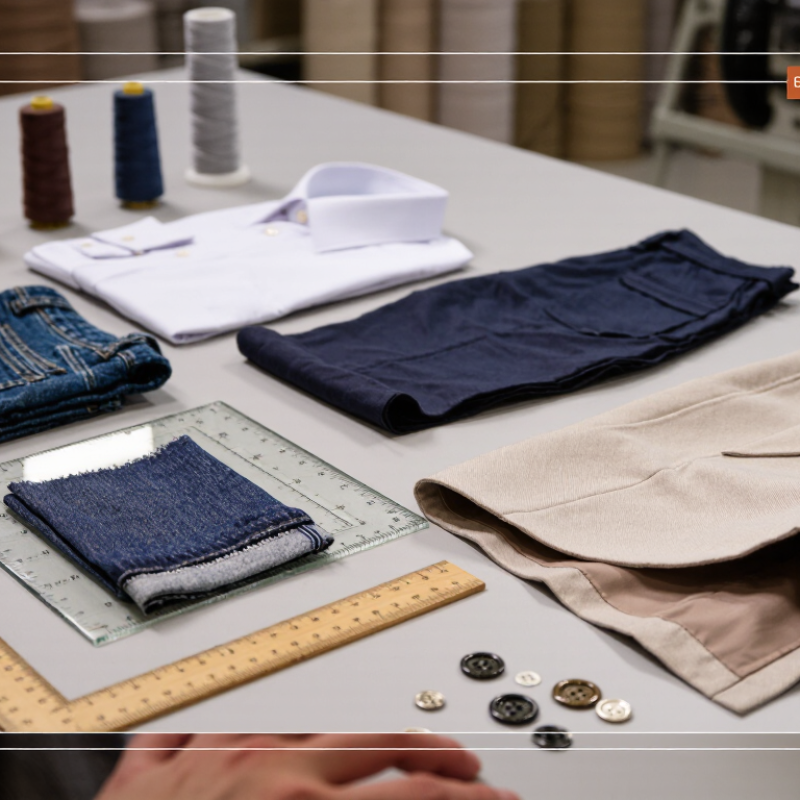
A woven fabric is made by interlacing two yarn systems at right angles. Warp yarns run lengthwise; weft yarns cross them. This grid gives shirts, trousers, and jackets a defined shape. Plain weaves feel clean and balanced, while twill creates diagonal ribs and often drapes more softly. Construction matters at the cutting table, too: grain direction affects how panels hang and how seams behave.
Woven does not automatically mean durable or comfortable. Fiber, yarn twist, density, and finishing all change the result. A tight fabric may hold a sharp collar but feel stiff against the skin. A looser weave can breathe well, yet snag more easily. Textile Exchange’s Materials Market Report 2024 estimates global fiber production reached 124 million tonnes in 2023. That figure covers all fiber types and structures, not woven apparel alone, but it shows why choosing fiber and construction carefully matters. A fabric swatch can also mislead; test it after washing.
Tips: Request samples in the intended weight and finish. Check shrinkage, seam puckering, and color after laundering. Ask the mill for fiber composition and fabric specifications, then compare results with a wear test. Small batches help reveal problems before a full production run.
Why Choose Woven Apparel Manufacturing for Your Brand?
Fiber Supply Context: Global Output Reached 124 Million Tonnes in 2023 (Textile Exchange)
Global fiber production reached 124 million tonnes in 2023, according to Textile Exchange’s Materials Market Report 2024. Polyester made up about 57% of that volume. These figures show the scale and concentration of today’s fiber supply, but they do not guarantee that every fiber is available with the same quality, origin, or lead time. Woven manufacturing gives product teams room to work with different yarns and fabric structures. A tighter weave can add body to a shirt; a lighter construction can improve airflow. Small choices matter.
For a sourcing team, fiber statistics are a starting point, not a purchasing plan. Ask suppliers about yarn specifications, fabric weight, shrinkage, and color consistency before approving bulk production. A cotton poplin and a polyester plain weave may look similar on a swatch, yet behave differently during cutting and wear. Textile Exchange also reports that recycled fibers remained a small share of total production in 2023, a reminder that recycled content claims need careful verification. That is not the whole picture. Woven apparel can support durable, practical designs, but fabric testing and clear traceability still take time—and sometimes the first sample gets it wrong.
| Fiber category | Approx. share of global fiber output, 2023 | Approx. output, 2023 (million tonnes) | Common woven apparel applications | Woven product consideration |
|---|---|---|---|---|
| Polyester | 57% | 70.7 | Shirts, trousers, dresses, outerwear, linings | Can be used in lightweight or durable fabrics; fabric performance depends on yarn, construction, and finishing. |
| Cotton | 20% | 24.8 | Shirting, denim, chinos, dresses, casualwear | Woven construction supports a wide range of weights and textures, from lightweight poplin to heavier twill. |
| Other plant-based fibers | 7% | 8.7 | Linen and other plant-fiber shirts, trousers, dresses, and blends | Fiber and fabric characteristics vary; confirm the intended hand feel, care requirements, and fabric specification. |
| Manmade cellulosic fibers | 6% | 7.4 | Blouses, dresses, shirts, and woven linings | Often selected for fluid drape; garment results depend on the specific fiber, weave, and finishing. |
| Polyamide (nylon) | 5% | 6.2 | Outerwear, lightweight woven garments, and functional apparel | Suitable for a range of fabric constructions; match the fabric specification to the garment’s intended use. |
| Other synthetic fibers | 3% | 3.7 | Specialty woven apparel and blended fabrics | Properties differ by fiber type, so assess the actual material rather than relying on the category alone. |
| Wool | 1% | 1.2 | Suiting, coats, trousers, and tailored apparel | Woven structures are widely used in tailoring; select weight and construction for the garment’s intended season and use. |
| Other animal fibers and silk | <1% each category | <1.2 each category | Specialty shirts, dresses, occasionwear, and blends | These are smaller fiber categories; confirm material availability and fabric specifications during sourcing. |
Source: Textile Exchange, Materials Market Report 2024. Global fiber production reached approximately 124 million tonnes in 2023. Output figures above are estimates calculated from the report’s rounded category shares and the reported total; figures may not sum to the total because of rounding and categories reported as less than 1%.
Material selection shapes how a woven garment looks, feels, and performs. Polyester accounted for 57% of global fiber output in 2023, according to Textile Exchange. That scale makes polyester widely available for woven fabrics, from crisp shirt cloth to durable workwear. It can offer consistent color and useful abrasion resistance. But fiber share is not a quality score.
For a brand, the right choice starts with the garment’s actual use. A tightly woven polyester fabric may hold its shape well, while a lighter construction can improve airflow. Ask suppliers for fabric specifications, test swatches for drape and colorfastness, and check how the material behaves after washing. Small differences matter. A sample can feel smooth on a table, then cling or crease on the body.
Polyester’s popularity deserves careful thought, not automatic approval. Recycled content may be an option, but request documentation and assess the finished fabric, not just the fiber claim. Blends can change hand feel and care needs, too. I would not choose on price alone; that shortcut can disappoint. Woven manufacturing gives brands control over structure, yet each choice has trade-offs. Test before committing.
Why Choose Woven Apparel Manufacturing for Your Brand?
For woven apparel, fabric strength affects how garments handle cutting, sewing, and repeated wear. ISO 13934-1 provides a controlled way to assess tensile behavior using the strip method. A fabric strip is clamped and pulled until it breaks. The test records maximum force and elongation at that force. It is useful data, but not a complete measure of garment durability.
Testing should include specimens cut along both warp and weft directions, since woven fabrics can behave differently across them. Samples are conditioned before testing, then pulled at a specified rate using a tensile-testing machine. Comparing results between fabric lots can help flag changes before production. Still, the method tests fabric strips, not finished seams or whole garments. A high reading alone does not guarantee a comfortable or long-lasting product. That distinction is easy to overlook.
Tips: Agree on sampling and acceptance limits before testing. Keep direction, conditioning, and test setup consistent. Review unusual results instead of averaging them away; fabric variation can be real, or the test may need repeating.
ISO 13934-1 uses the strip method to measure a fabric’s maximum tensile force and elongation at that force. The chart shows key test dimensions: a 50 mm specimen width and 200 mm clamp separation. The standard defines a test method, not a universal pass mark; results should be assessed against the fabric’s intended use and specification.
Reference: ISO 13934-1, Textiles — Tensile properties of fabrics — Part 1: Determination of maximum force and elongation at maximum force using the strip method.
Compare factories using the same woven style, fabric, color count, and order quantity. Ask for minimums per color, sample-to-bulk lead times, and a dated production schedule. A low minimum can help test a new design, but may raise fabric costs or limit color choices. Confirm whether the quoted lead time includes lab dips, fit approval, fabric booking, and shipping. Small details matter.
Fabric yield deserves a close look. Request the marker plan, usable fabric width, expected consumption per garment, and the assumptions behind the estimate. Plaids, stripes, shrinkage, and defects can change cutting efficiency. Textile Exchange’s Materials Market Report 2024 estimates global fiber production reached 124 million tonnes in 2023, underscoring the scale of material use. Yet a factory’s yield figure is only useful when it matches your actual fabric and pattern.
Ask for test reports tied to the production fabric lot, not just a generic sample. For woven garments, relevant checks may include dimensional change after washing, colorfastness to washing and rubbing, and seam strength. Look for named methods, such as ISO 5077 or ISO 105-C06, plus test dates and pass criteria. WRAP’s 2017 Valuing Our Clothes report estimated that extending clothing use by nine months could reduce carbon, water, and waste footprints by 20–30%. A test pass cannot guarantee long wear, but it gives your team evidence to question. A tidy spreadsheet can still miss a real-world fabric variation.
Two yarn systems cross at right angles. Warp yarns run lengthwise; weft yarns cross them.
Plain weaves look balanced and clean. Twill shows diagonal ribs and often drapes more softly.
No. It may hold a crisp collar but feel stiff. A looser weave can breathe, yet snag more easily.
Fiber, yarn twist, fabric density, and finishing all matter. The word “woven” alone tells you little.
It affects how garment panels hang and how seams behave. A small cutting change can show up on the finished shirt.
Request samples in the intended weight and finish. Test shrinkage, seam puckering, and color after washing.
Not always. A swatch can mislead; wash and wear tests reveal more. We may still miss something.
Ask for fiber composition, yarn details, fabric weight, and color consistency. Check claims carefully.
They can uncover fabric or fit problems before a larger run. A first sample can be wrong.
Woven Apparel Manufacturing uses interlaced warp and weft yarns to create fabrics with distinct structure, stability, and surface qualities. This construction can support a wide range of garment needs, from crisp, durable materials to lighter, more flexible options. Fiber availability also shapes material planning: Textile Exchange reported global fiber production of 124 million tonnes in 2023, with polyester accounting for 57% of the total. These figures provide useful context when comparing polyester with other fibers, while the right choice still depends on the intended feel, performance, and production requirements of each garment.
Before selecting a factory, assess fabric performance as well as material suitability. ISO 13934-1 provides a method for measuring fabric tensile strength, helping teams compare how woven materials respond to force. Factory evaluation should also consider minimum order quantities, lead times, fabric yield, and relevant test results. Reviewing these factors together can help align fabric selection, quality expectations, and production capacity, making it easier to plan a reliable manufacturing process.