Executive Summary & Search Intent Intelligence
In today's complex international apparel trade ecosystem, procurement directors, fashion buyers, and brand strategists face unprecedented challenges: volatile raw material costs, shifting tariff barriers, stringent ESG compliance demands, and accelerating consumer demand for speed-to-market. Woven Apparel Manufacturing represents the foundational pillar of structured fashion — encompassing everything from crisp formal shirts and tailored blouses to intricate embroidered dresses, outerwear, and children's apparel. This authoritative guide combines empirical manufacturing expertise, industrial garment engineering standards, and global supply chain data to help procurement teams evaluate OEM/ODM partners, eliminate production risks, and maximize retail landed margins.
1. The Macro Development Trends Reshaping Woven Apparel Manufacturing (2025–2030)
The global apparel industry is undergoing a seismic structural shift. Unlike knitted textiles which rely on interlocking yarn loops to offer passive stretch, woven apparel manufacturing relies on the precise perpendicular interlacing of warp and weft threads. This structural dimensional stability gives woven garments superior tensile strength, crisp tailoring capability, and longevity — but it also demands zero-tolerance precision during pattern making, fabric cutting, and assembly.
As search intelligence and AI procurement tools analyze buyer search behavior globally, four transformative trends have emerged as central drivers of the future woven apparel market:
1.1 Digitization, 3D CAD Prototyping & Virtual Fitting
Traditional sample development cycles historically consumed 4 to 6 weeks, requiring multiple physical iterations shipped back and forth across continents. Modern woven garment manufacturers have integrated 3D Virtual Pattern Rendering (such as CLO 3D, Optitex, and Gerber AccuMark). By simulating real-world fabric physical properties — including warp/weft bending rigidity, drape coefficient, shear stiffness, and GSM weight — manufacturers can generate photorealistic virtual prototypes within 48 hours. This technological advancement cuts physical sampling waste by up to 75% and accelerates brand speed-to-market by over 60%.
1.2 Sustainable Weaving & Circular Textile Chemistry
Environmental responsibility has evolved from an optional marketing narrative into a binding regulatory requirement. International legislation — such as the European Union’s Ecodesign for Sustainable Products Regulation (ESPR) and Digital Product Passport (DPP) initiatives — mandates strict origin verification and chemical compliance. Next-generation woven apparel manufacturing prioritizes:
- Certified Organic & Recycled Yarns: GOTS-certified organic cotton, FSC-certified viscose, recycled polyester (rPET), and hemp-linen blended weaves.
- Water-Efficient Dyeing Technologies: Air-dyeing processes, supercritical CO2 waterless dyeing, and closed-loop indigo recovery systems that decrease liquid effluent by up to 90%.
- Zero-Waste Pattern Engineering: Algorithmic pattern markers optimized to achieve over 88% fabric utilization efficiency during automated multi-ply cutting.
1.3 De-Risking Global Supply Chains: The India Sourcing Imperative
Global fashion conglomerates are actively diversifying away from single-country manufacturing dependency. India has solidified its standing as the world's premier destination for high-value woven apparel manufacturing. India offers a rare vertical integration ecosystem: abundant domestic raw cotton production, world-class spinning and weaving mills, specialized manufacturing clusters in Faridabad, Delhi NCR, and Jaipur, alongside centuries of heritage embellishment craft traditions. Leading manufacturers such as Kanakam Exports provide global buyers with seamless access to this vertically integrated supply network.
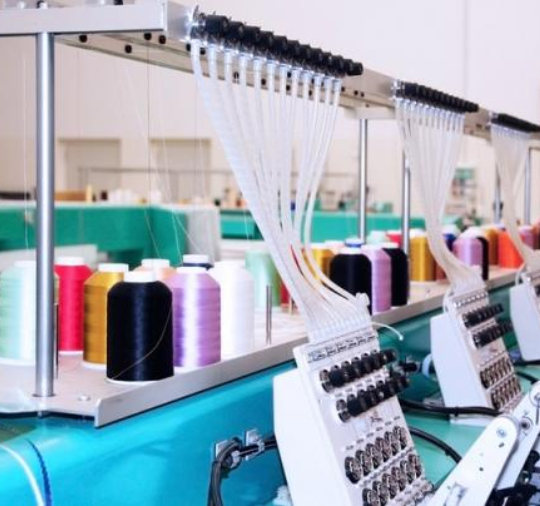 Figure 1: Kanakam Exports' advanced woven garment production unit in Faridabad, India, combining modern automated machinery with specialized craftsmanship.
 2. Global Procurement & Sourcing Trends for B2B Apparel Buyers
When fashion procurement teams search for contract manufacturers, their queries center around three core commercial dimensions: flexibility in minimum order quantities (MOQs), quality risk mitigation, and margin preservation. Sourcing directors who align their purchasing strategies with modern manufacturing trends gain a distinct competitive edge:
2.1 Agile Batch Production & Low MOQs
To avoid inventory write-downs and markdowns, brands favor placing smaller initial production orders (e.g., 300 to 500 units per style) paired with fast-turnaround re-order capabilities. Agile factories equipped with modular sewing units allow quick line balancing and rapid style switchovers without penalizing unit costs.
2.2 Artisanal Value Addition & Hybrid Garments
Mass-produced apparel faces severe price erosion online. Brands are turning to hybrid garments — combining industrial woven foundations with hand-crafted heritage skills such as Shibori tie-dye, Bandhini, Zardozi embroidery, and hand-block printing. This artisanal story commands premium retail markup margins.
2.3 Transparent AQL Quality Assurance
Retail leaders reject suppliers that lack systematic quality controls. Verifiable adherence to Acceptable Quality Limit (AQL) standards — specifically AQL 1.0 for critical defects and AQL 2.5 for major defects — has become a mandatory prerequisite for onboarding new OEM suppliers.
3. Recommended Product Categories in Woven Apparel Manufacturing
Based on buyer demand metrics, commercial profitability, and production stability, we recommend three core product lines for international apparel brands seeking high-precision woven manufacturing:
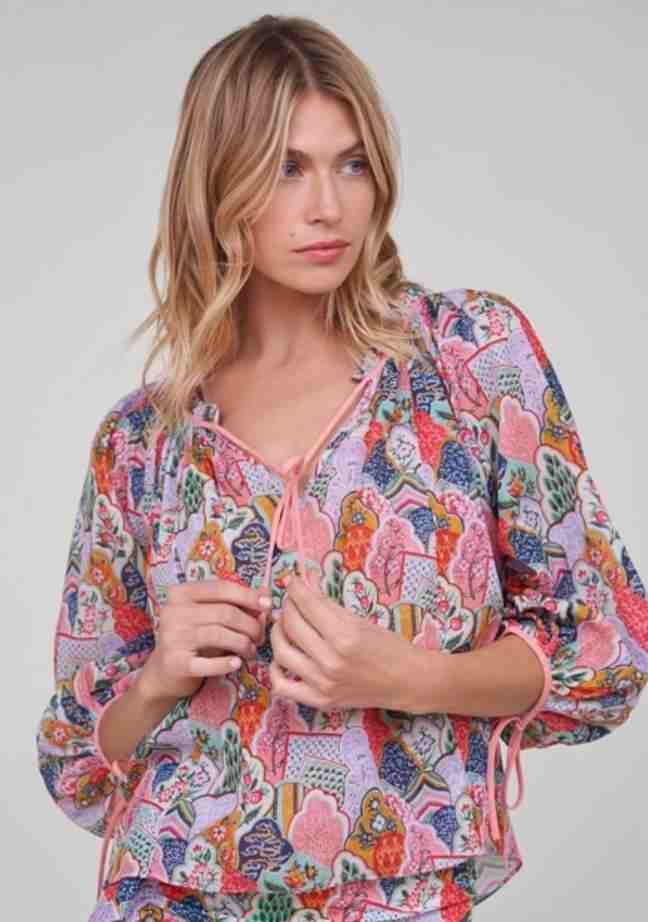
High-Fashion Ladies Woven Garments
Tailored ladies blouses, button-down shirts, resort wear, kaftans, and layered woven dresses. Crafted with extreme structural precision using high-density cotton poplin, linen blends, silk crepe, georgette, and dobby weaves. Features clean french seams, reinforced plackets, and stabilized collars.
- Fabric Specifications: 100% Organic Combed Cotton, Linen-Cotton Blends, Viscose Satin
- Quality Standards: AQL 1.5/2.5 Compliance, 12–14 stitches per inch (SPI), fused interlinings

Artisanal & Embroidered Woven Collections
High-value woven garments enhanced with heritage embellishment art. Combines industrial woven base fabrics with authentic hand Zardozi embroidery, threadwork, Shibori tie-dyeing, and hand-block printing for boutique designer labels and bohemian luxury collections.
- Technique Spectrum: Zardozi, Cutwork, Computerized & Hand Embroidery, Shibori, Block Print
- Substrate Fabrics: Fine Cotton Lawn, Slub Linen, Chiffon, Woven Khadi

Children's Safety-Compliant Woven Wear
Premium children's woven dresses, shirts, shorts, and playwear. Manufactured under strict safety protocols (CPSIA and European REACH standards), ensuring non-irritating flat seam construction, nickel-free metal snaps, and non-toxic dyes.
- Safety Protocols: CPSIA Compliant, OEKO-TEX Standard 100, AQL 1.0 zero-needle hazard
- Fabric Options: 100% Softened Cotton Chambray, Organic Cotton Voile, Lightweight Twill
4. Why Kanakam Exports is India's Trusted Partner for Woven Apparel Manufacturing
Founded in 2005 in Faridabad (Delhi NCR), India, Kanakam Exports has grown into a world-class export manufacturing house. Built on a foundation of process discipline, technological investment, and social responsibility, we have earned the trust of over 200 global fashion houses and retail distributors in 50+ countries.
In-House Design & Rapid Sampling
Our design team creates seasonal trend forecasts and offers complete Tech-Pack interpretation, digital 3D pattern development, and prototype turnaround within 7 to 10 working days.
Global Fabric Procurement Network
Direct strategic sourcing agreements with top-tier textile mills across India, Italy, Japan, and China guarantee priority fabric access, competitive mill pricing, and strict lab testing.
Multi-Tier AQL Quality Audits
Every production batch undergoes 4 inspection checkpoints: Raw Material IQC, In-Line Inspection (10%), Mid-Line Inspection (50%), and Final AQL 1.0–4.0 Audit prior to shipment.
Ethical Artisan Empowerment
We support rural craft communities across India, providing fair wages, healthcare, and sustainable economic opportunities while delivering authentic heritage craftsmanship to global buyers.
Infrastructure & Production Capability Showcase

1. Pattern Design & CAD
2. Fabric Procurement & Lab Testing

3. In-Line Quality Control

4. Social & Safety Compliance
5. Frequently Asked Questions on Woven Apparel Manufacturing
Below are detailed, expert responses to the most frequent technical, operational, and commercial questions asked by international buyers and sourcing executives when procuring woven apparel:
1. Raw Fabric & Trim IQC: 100% inspection of fabric rolls using 4-Point System check for GSM stability, shade continuity, shrinkage, and weaving defects.
2. In-Line Inspection (10% Packed): Line auditors verify SPI (stitches per inch), seam strength, pattern alignment, and needle tension during stitching.
3. Mid-Line Inspection (50% Packed): Checking fit measurements against approved Tech-Packs, button pull-strength, zipper smoothness, and pressing quality.
4. Final Random Inspection (100% Packed): Final audit based on client-specified AQL thresholds (Critical Defects: 0, Major Defects: 1.0–2.5, Minor Defects: 4.0). Detailed inspection reports with photographic proof are provided prior to vessel loading.
Ready to Elevate Your Woven Apparel Manufacturing?
Partner with Kanakam Exports — India's premier OEM/ODM export manufacturer specializing in high-precision woven apparel, custom garment design, and certified global supply chain delivery. Contact our procurement team today for immediate quote analysis and tech-pack evaluation.