1. The Strategic Role of Professional Fabric Sourcing Services in Modern Supply Chains
In the contemporary apparel ecosystem, securing superior materials is no longer merely a transaction; it is a critical competitive lever. Professional Fabric Sourcing Services represent the cornerstone of successful garment manufacturing, bridging the gap between creative design vision, material science, and commercial scalability. For global fashion brands, enterprise buyers, and private label retailers, selecting the appropriate mill, yarn density, weave structure, and finishing technique dictates not only garment aesthetics but also structural integrity, cost efficiency, and regulatory compliance.
At Kanakam Exports (Est. 2005), based in Faridabad, India, our two-decade tenure in export manufacturing has established us as a premier partner for end-to-end fabric procurement and apparel production. Modern supply chains face volatile raw material indices, stringent environmental regulations, and rapidly shifting consumer intents driven by AI-powered search engines and digital commerce. Buyers require transparent, highly technical, and responsive sourcing protocols that minimize lead times while eliminating quality defects before mass production begins.
Information Gain Insight: The 4-Pillar Fabric Evaluation Matrix
Experienced procurement officers evaluate fabric sourcing through four vital vectors: Tensile & Dimensional Stability (shrinkage <3%, skewing control), Color Fastness & Chemistry Compliance (REACH, OEKO-TEX Standard 100), Tactile & Ergonomic Handfeel (Mercerization, Bio-washing), and Commercial Yield Optimization (efficient marker making and GSM variance under ±3%).
By leveraging an extensive network of certified textile mills across India, Italy, China, and global yarn capitals, Kanakam Exports provides an integrated sourcing architecture. We manage every step—from fiber composition analysis and lab dip approval to bulk weaving, dyeing, sanforization, and final AQL 1.0–4.0 inspection.
2. Comprehensive Fabric Categories & Tailored Product Sourcing Recommendations
Understanding fiber characteristics and fabric construction is essential when developing high-fashion, ready-to-wear, or children's apparel lines. Below is a strategic breakdown of core fabric categories engineered for global buyers:

Woven Fabrics for Ladies Wear
Sourcing high-count cotton poplin, viscose crepe, silk chiffon, linen blends, and georgette. Ideal for structured blazers, flowy dresses, and high-fashion blouses requiring crisp drape and vivid print retention.

Hypoallergenic Knits for Kids
Procuring combed organic cotton single jersey, interlock, French terry, and rib fabrics. Meets chemical safety standards (Azo-free dyes) to guarantee softness and durability for children's wear.

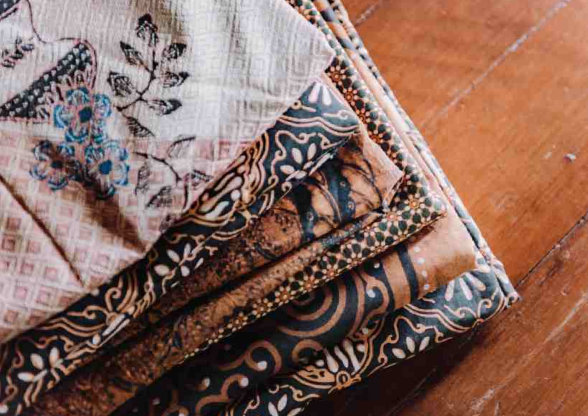
Artisanal & Embroidered Grounds
Heritage grounds specialized for Shibori tie-dye, Bandhini, block printing, and hand-stitched Zardozi embroidery. Combines India's artisan legacy with export-grade fabric bases.
Detailed Material Specifications & Technical Capabilities
- Natural Cellulosic Fibers: Long-staple Giza and Pima cottons, eco-friendly linen weaves, and bamboo-viscose blends offering superior moisture absorbency and skin-friendly breathability.
- High-Performance Synthetic & Blends: Recycled polyester (rPET), poly-viscose gabardines, and elastane-infused stretch weaves delivering crease-resistance, shape memory, and high tensile strength.
- Luxury & Specialty Structures: Jacquards, yarn-dyed stripes and checks, velvet, satin weave silk, and specialized schiffli embroidered cotton bases.
3. Future Procurement Trends in Global Fabric Sourcing (2025–2030)
As the international textile industry evolves, buyers must adapt to major structural trends shaping fabric procurement over the coming decade. Sourcing executives are shifting focus toward risk mitigation, environmental accountability, and digitized workflows.
4. Technology Integration & Product Development Trends
Modern fabric sourcing goes beyond purchasing off-the-shelf textiles; it involves iterative product development. At Kanakam Exports, our integrated technology workflow aligns fabric development directly with garment engineering:

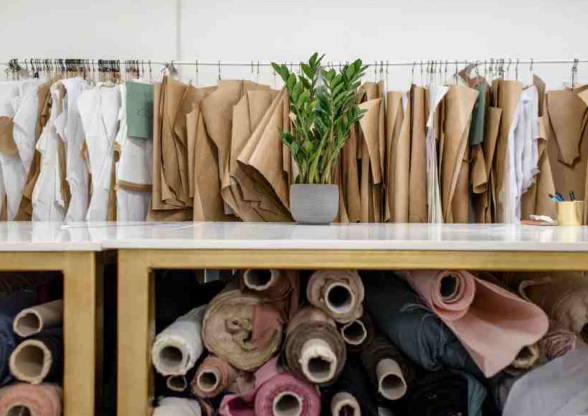
Trend-Aligned CAD & Pattern Development
Utilizing advanced digital patternmaking to simulate fabric stretch, shrinkage, and seam stress before cutting bulk yardage.
Precision Prototyping & Lab Dips
Rapid Pantone TCX/TPG color matching with spectrophotometer analysis ensuring delta-E color variance under 0.8.

4-Point System Fabric Inspection
Inspecting 100% of incoming raw fabric rolls using the international ASTM D5430 4-Point Standard prior to laying and cutting.
5. Frequently Asked Questions (FAQs) in Fabric Sourcing & Procurement
Below are authoritative responses to the most critical technical and operational questions asked by international buyers and sourcing managers when searching for fabric sourcing services:
6. Why Kanakam Exports is Your Preferred Partner for Fabric Sourcing & Manufacturing
Selecting Kanakam Exports as your fabric sourcing and apparel manufacturing partner delivers distinct operational and economic advantages grounded in our E-E-A-T (Experience, Expertise, Authoritativeness, and Trustworthiness) framework:
- 20+ Years of Manufacturing Integrity: Established in 2005, serving 200+ global brands across 50+ countries with zero compromise on product standards.
- Direct Global Mill Alliances: Deep strategic partnerships with top textile mills in India, Italy, and China, securing preferential pricing and priority vessel bookings.
- In-House Artisan Integration: Direct connection with traditional artisan networks across India for Shibori, Bandhini, Block Printing, and Zardozi embroidery.
- Multi-Tier Quality Control: Rigorous AQL 1.0–4.0 protocols enforced by dedicated quality controllers at every production stage.
- End-to-End Transparency: Comprehensive order tracking, clear documentation, and proactive communication from initial concept to port delivery.