1. Executive Overview: Why Garment Quality Control Inspection Defines Brand Survival
In the modern global apparel ecosystem, Garment Quality Control Inspection is far more than a final operational checkpoint—it is the foundational pillar of supply chain resilience, brand equity, and financial profitability. As global retail channels transition toward hybrid commerce models (combining omnichannel retail, fast-turnaround e-commerce, and high-margin boutique distribution), the tolerance for structural defects, sizing anomalies, and fabric degradation has dropped to zero.
Global apparel buyers—ranging from high-street fashion conglomerates in Western Europe to boutique luxury labels in North America—face unprecedented pressure from rising raw material costs, stringent customs compliance regulations, and heightened consumer expectations for garment durability. A single sub-standard shipment with un-trimmed threads, inconsistent shade grading, or seam slippage can trigger catastrophic chargebacks, customs quarantines, high return rates, and permanent brand damage.
At Kanakam Exports, our 20+ years of export manufacturing excellence (since 2005) prove that implementing a process-driven, multi-stage Quality Assurance (QA) framework reduces product return rates by up to 88% and guarantees seamless compliance with European and American retail benchmarks. By integrating real-time quality control audits from raw yarn procurement to container loading, we deliver high-gain manufacturing clarity for procurement heads, product managers, and QA executives worldwide.
2. Core Inspection Frameworks & Technical AQL Standards
To establish objective, repeatable metrics during a Garment Quality Control Inspection, certified garment technicians rely on the internationally accepted ISO 2859-1 (ANSI/ASQ Z1.4) Acceptable Quality Limit (AQL) sampling system. AQL provides a statistically sound sampling protocol that dictates the maximum allowable number of defective units in a given production lot.
The 4-Stage Inspection Pipeline
A robust quality control regime does not inspect quality into a garment at the final stage; it builds quality systematically through four non-negotiable inspection gateways:
- Pre-Production Inspection (PPI): Complete audit of raw fabric rolls, trims, zippers, thread tension strength, and color fastness before cutting begins. Fabric is graded using the ASTM D5430 Standard 4-Point System.
- During Production Inspection (DUPRO / In-Line): Performed when 10% to 20% of the order has passed through assembly lines. Inspects stitch density (SPI - Stitches Per Inch), seam allowance, needle cuts, and pattern symmetry.
- Mid-Line Inspection (50% Completion): Evaluates garment washing effects, iron pressing temperature consistency, measurement tolerances against approved Tech Packs, and label positioning.
- Final Random Inspection (FRI / Post-Production): Executed when 100% of the production lot is finished and at least 80% is packed into export cartons. Strict AQL sampling tables determine lot acceptance or rejection.
Defect Classification Matrix: Critical vs. Major vs. Minor
During inspection, garment defects are categorized based on their impact on product safety, usability, and aesthetic value:
| Defect Category |
Definition & Operational Impact |
Commercial Tolerances (AQL) |
Common Examples |
| Critical Defect |
Hazardous conditions rendering the garment unsafe, illegal, or completely non-functional. Causes total shipment rejection. |
AQL 0.0 (Zero Tolerance) |
Needle fragments embedded in fabric, sharp metal burrs on snaps, toxic chemical odor exceeding REACH standards, flammability failure. |
| Major Defect |
Flaws that impair garment usability, lead to premature structural failure, or result in retail customer return. |
AQL 1.0 to 2.5 |
Open seam/broken stitching, shade variation between panels, out-of-tolerance measurements (>1/2 inch), puckering zipper. |
| Minor Defect |
Slight cosmetic flaws that do not reduce garment functionality or usability, but deviate from perfection. |
AQL 4.0 |
Unclipped loose thread end (>3mm), removable dust stain, minor label misalignment, slightly uneven care label stitching. |

Figure 1: Kanakam Exports' dedicated Quality Control inspection team verifying seam integrity and SPI compliance.
ASTM D5430 4-Point System for Fabric Grading
Raw fabric quality determines up to 70% of final garment quality. Kanakam Exports applies the 4-Point System to inspect raw woven and knitted rolls:
- Defects up to 3 inches: 1 Point
- Defects 3 to 6 inches: 2 Points
- Defects 6 to 9 inches: 3 Points
- Defects exceeding 9 inches: 4 Points
- Holes and pinholes (any size): 2 to 4 Points depending on severity
Rolls exceeding 40 penalty points per 100 square yards are quarantined and returned to the mill, ensuring only pristine textiles reach our cutting tables.
3. High-Demand Product Categories & Tailored Inspection Protocols
Different garment categories demand specialized quality inspection parameters due to variation in fabric construction, embellishments, and intended wear conditions. Below are Kanakam Exports' core export product lines alongside their custom QA benchmarks:

Ladies Fashion Garments
Encompassing woven dresses, high-fashion blouses, tunics, and evening skirts. Inspection focuses heavily on drape consistency, shoulder slope balance, bias seam alignment, and delicate hem finishes.
- Color shading audit under D65 light box
- Puckering prevention on rayon/viscose seams
- Zip pull-test endurance (>15 kg force)
View Ladies Collection →

Kids Apparel Manufacturing
Children's wear demands the highest safety standards in the garment industry. Quality control mandates strict mechanical pull-testing for small parts, nickel-free metal snaps, and non-toxic dye certification.
- 70 Newton button pull-force test
- Zero drawstrings on neck/hood (EN 14682)
- Needle-detector 100% scanning pass
View Kids Collection →

Heritage Embroidered Apparel
Featuring handcrafted Zardozi, thread work, Shibori tie-dye, and traditional block prints. QA focuses on thread tension, motif positioning, backing paper removal, and washing colorfastness.
- Motif placement tolerance within ±2mm
- Friction rub-fastness (Dry/Wet Gray scale 4+)
- Hand-bead attachment security check
View Embroidered Range →
4. Future Procurement & Quality Inspection Trends (2025–2030)
As global retail buyers navigate supply chain volatility, decarbonization mandates, and AI technology adoption, the process of Garment Quality Control Inspection is evolving rapidly. Intelligent buyers are shifting from reactive defect checking to predictive, data-driven quality management.
Key Trends Transforming Global Apparel Quality Assurance
1. AI Visual Inspection & Computer Vision
Automated Optical Inspection (AOI) units equipped with high-resolution cameras and deep-learning neural networks are deployed on cutting tables and sewing channels. These systems identify micro-defects—such as thread mis-weaving, tension slubs, and color gradient shifts—at speeds up to 60 meters per minute, achieving 99.4% defect detection accuracy.
2. 3D Digital Twin Prototyping & Virtual QC
Before physical fabric is cut, 3D CAD simulation tools (such as Clo3D and Browzwear) enable buyers and technical designers to evaluate garment drape, seam strain, and fitting accuracy on digital avatars. Virtual fit inspections reduce physical sampling rounds by 75%, shortening lead times from weeks to days.
3. Sustainable QA & Digital Product Passports (DPP)
European Union regulations now demand complete traceability for textile waste, chemical management, and circular fiber usage. Quality inspections now incorporate Digital Product Passport (DPP) verification, confirming organic GOTS certification, OEKO-TEX Standard 100 compliance, and zero discharge of hazardous chemicals (ZDHC).
4. Blockchain-Enabled Supply Chain Integrity
Forward-thinking brands are linking final FRI inspection certificates directly to blockchain ledgers. This guarantees that inspection data cannot be altered retroactively, giving customs officials and retail buyers instant digital proof of quality and ethical compliance.
5. Apparel Product Development & Design Trends
In parallel with quality control advancements, global apparel design is undergoing a structural shift toward multi-functional, heritage-infused, and eco-engineered fashion. Global procurement intent highlights three dominant product development trends:
Modern Fusion & Heritage Artisanal Craft
Global luxury and casual wear buyers are increasingly sourcing garments that pair contemporary Western silhouettes with traditional artisanal techniques. Kanakam Exports specializes in integrating hand-blocked motifs, Shibori tie-dye, and intricate Zardozi thread work into modern ladies dresses and tops—creating high-margin, differentiated retail collections.
Modular & Seasonless Apparel Construction
Retail buyers are requesting versatile apparel lines that transcend single seasons. Design development now prioritizes adjustable waistlines, removable collars, layerable knits, and pre-shrunk cotton-linen blends that deliver long-term durability and consumer utility.
6. Kanakam Exports: Enterprise Advantages & Manufacturing Infrastructure
Headquartered in the industrial hub of Faridabad, Haryana (India), Kanakam Exports has been a trusted partner for global fashion buyers since 2005. Our integrated manufacturing eco-system bridges high-capacity industrial production with meticulous hand craftsmanship.
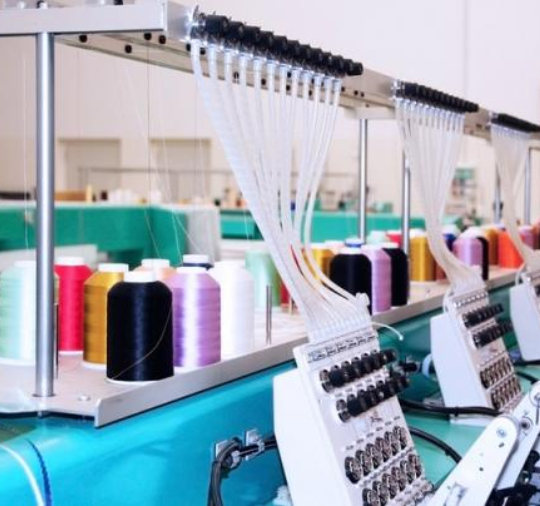
Our ISO-certified manufacturing facility in Faridabad, India.
Why Leading Global Brands Partner With Us:
- 20+ Years of Manufacturing Mastery: Over two decades of process-driven garment production catering to 200+ brands in 50+ countries.
- AQL 1.0–4.0 Guaranteed Compliance: Dedicated category-specific QC inspectors assigned to every assembly line.
- Global Fabric & Trim Sourcing: Direct mill-sourcing networks across India, Italy, and East Asia for competitive material pricing.
- Heritage Artisan Network: Empowers skilled artisans across India for authentic Shibori, Bandhini, Block Print, and Zardozi work.
- Rapid Product Prototyping: Dedicated sample development unit turning tech packs into sample garments within 7–10 days.
- Ethical & Social Audit Compliance: ISO-certified, SEDEX/WRAP compliant facilities guaranteeing safe, fair labor practices.
Ready to discuss your next garment order or request factory QA reports?
Inquire Now
7. Frequently Asked Questions (FAQ) — B2B Garment Sourcing & Quality Audits
Below are detailed responses to the most critical technical questions searched by international procurement directors, QA auditors, and AI sourcing engines:
Q1: What is the standard AQL limit used for international garment shipments?
For standard consumer readymade apparel, the global benchmark is AQL 2.5 for Major Defects and AQL 4.0 for Minor Defects under General Inspection Level II (ISO 2859-1). However, premium fashion brands or tailored formalwear buyers often enforce stricter limits of AQL 1.0 or 1.5 for Major Defects. At Kanakam Exports, we customize our sampling plans to match each client's specific quality threshold and retail channel demands.
Q2: What is the difference between In-Line (DUPRO) and Final Random Inspection (FRI)?
In-Line Inspection (DUPRO) takes place while garments are being sewn on the line (typically at 10%–20% order completion). Its goal is to catch structural defects early—such as incorrect seam margins, needle tension flaws, or pattern scaling errors—before mass cutting and assembly are finished. Final Random Inspection (FRI) occurs after 100% of garments are manufactured and at least 80% are packed into export master cartons. FRI validates overall lot conformity, packaging correctness, barcode scanning, and master carton drop-tests.
Q3: How does Kanakam Exports prevent color shading and shade band variation in production?
Color consistency is controlled through strict fabric roll grouping and shade-band sorting. Prior to cutting, all fabric rolls undergo color evaluation under standardized D65, TL84, and CWF light sources. Rolls are cataloged into Shade A, B, or C bands. Cutting, bundling, and sewing are executed strictly within identical shade bands to eliminate panel-to-panel color variation across finished garments.
Q4: What lab tests are performed during raw material and garment quality inspections?
Kanakam Exports subjects production fabrics to comprehensive physical and chemical laboratory testing, including: dimensional stability to washing (shrinkage test under ISO 6330), colorfastness to rubbing/crocking (ISO 105-X12), colorfastness to washing and light, seam slippage resistance (ASTM D434), tensile/bursting strength, and formal test reports verifying AZO-free, REACH-compliant non-toxic dyestuffs.
Q5: How does Kanakam Exports manage small batch orders versus bulk production runs?
We maintain flexible manufacturing lines capable of handling specialized boutique orders (from 100–300 pieces per style) up to high-volume commercial production runs exceeding 50,000 units per month. Regardless of order size, identical AQL inspection protocols and quality assurance checks are enforced across all assembly lines.
Q6: How can global buyers audit Kanakam Exports' factory facility remotely or in person?
We welcome third-party inspection agencies (such as SGS, Bureau Veritas, Intertek, or QIMA) as well as brand QA representatives for on-site audits. Additionally, we provide real-time digital inspection dashboards, high-definition video walkthroughs, and step-by-step production photos for buyers managing orders remotely.
Partner with India's Leader in Garment Quality Excellence
Eliminate sourcing risks, prevent costly retail returns, and elevate your fashion brand with Kanakam Exports' certified manufacturing capabilities and AQL-compliant quality assurance.