Latest trends, manufacturing guides, and expert advice from Kanakam Exports.
Exploring global apparel sourcing, quality control, and artisan techniques.
In-depth analysis for fashion brands, buyers, and sourcing managers.
Global buyers are rethinking how they select a Knitted Garment Exporter. Price still matters, but it no longer tells the whole story. Delivery reliability, fabric consistency, factory capacity, and compliance now shape purchasing decisions.
The World Trade Organization reported that global clothing exports were worth approximately US$576 billion in 2022. This figure shows the sector’s scale, yet it does not identify the most dependable suppliers. Buyers need more precise evidence. ITC Trade Map and UN Comtrade provide useful shipment data through HS Code 61, which covers knitted or crocheted apparel. These databases help compare export value, destination markets, and long-term performance. However, customs data can miss factory-level differences.
This guide examines leading export countries and manufacturers through a practical sourcing lens. It considers production experience, product specialization, quality systems, order flexibility, and communication standards. Bangladesh and Türkiye remain important for large-volume knitwear programs, while China, Vietnam, India, and other established hubs offer broader capabilities. The best choice depends on the product.
Cotton T-shirts need different expertise from fine-gauge sweaters. A buyer requesting 20,000 pieces should also examine sample approval, needle settings, shrinkage results, and carton labeling. Small details become expensive problems.
Sustainability must be checked carefully. Textile Exchange’s Materials Market Report 2024 estimated global fiber production at 124 million tonnes in 2023. That growth increases scrutiny of material sourcing and traceability. Certifications can support trust, but paperwork alone is not proof of responsible production. No ranking is flawless. Buyers should verify factory records, recent references, test reports, and shipment performance before signing a contract.
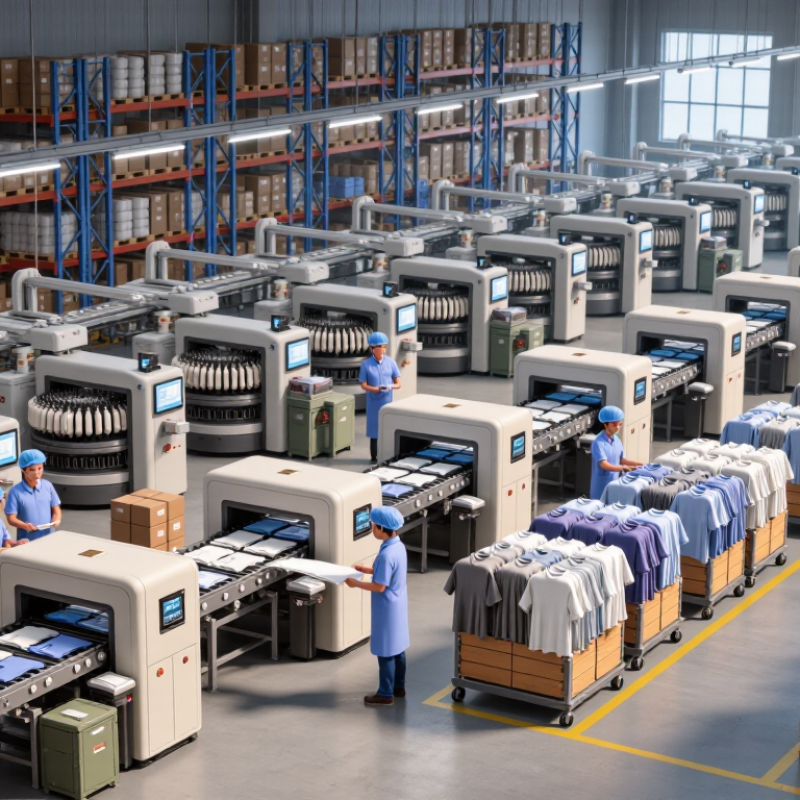
Knitted garment exporting covers the cross-border trade of sweaters, T-shirts, hosiery, activewear, and other looped-fabric products. Unlike woven clothing, knitted structures rely on interlocking yarn loops, creating stretch, softness, and varied surface textures. The sector serves daily clothing, sportswear, workwear, and seasonal collections.
The World Trade Organization valued global clothing exports at approximately US$576 billion in 2022. This figure shows the sector’s scale, although clothing statistics combine knitted and woven products. The Textile Exchange Materials Market Report 2024 reported global fiber production of about 124 million tonnes in 2023. It projects production could reach 160 million tonnes by 2030. Knitted exporters therefore operate inside a large, material-intensive supply chain.
Quality begins with measurable details. Buyers should check yarn composition, fabric weight, knitting gauge, shrinkage, colorfastness, and seam strength. A factory sample may look excellent, yet fail after repeated washing.
That happens.
Reliable exporters document fiber content, production batches, inspection results, and shipment records. They also explain minimum order quantities and realistic lead times before receiving payment. The International Trade Centre recommends using trade data and tariff classifications to compare supplier markets, especially under HS Chapter 61 for knitted or crocheted apparel. However, HS data can hide product differences. A lightweight cotton T-shirt and a technical sweater may share a broad category. Buyers need factory evidence, not only export rankings.
Knitted garment exports are concentrated in a few powerful production regions. WTO’s World Trade Statistical Review 2024 reported that global clothing exports weakened in 2023. China remained the largest exporter, with roughly one-third of world clothing shipments. Bangladesh and Vietnam followed, supported by large factories, skilled operators, and strong shipping networks. Türkiye and India also remain important suppliers, especially for cotton knitwear and shorter regional delivery routes.
ITC Trade Map data for 2023, using HS Chapter 61, shows a similar pattern for knitted garments. China leads by export value, while Bangladesh performs strongly in mass-market apparel. Vietnam benefits from diversified manufacturing and access to major consumer markets. Türkiye serves Europe quickly, although its costs are usually higher. European trade figures need careful reading. Intra-European shipments can make regional rankings look larger than production capacity. The data is useful, but not perfectly comparable.
Tips: Buyers should compare HS 61 export values, fabric composition, factory capacity, and delivery performance. Check at least three reporting sources, including WTO statistics, ITC Trade Map, and UN Comtrade. A low unit price may hide longer lead times or weaker quality controls. Ask for recent production samples and audit records. Small details matter. Freight disruption, currency changes, and seasonal capacity can quickly alter the best sourcing decision.
Top Knitted Garment Exporters for Global Buyers
Major knitted garment exporters usually offer more than basic T-shirts. Their product ranges often include polo shirts, sweatshirts, cardigans, leggings, underwear, socks, babywear, and seamless activewear. Cotton jersey remains a practical choice for everyday clothing, while rib knit adds stretch around cuffs, collars, and waistbands. Polyester supports quick-dry sportswear and uniform programs. Textile Exchange’s 2024 Materials Market Report states that global fiber production reached 124 million tonnes in 2023. Polyester represented about 57% of output, while cotton accounted for roughly 22%.
Product depth matters during supplier evaluation. Experienced exporters can adjust yarn count, stitch density, brushing, dyeing, and garment washing for different markets. A 180–220 GSM cotton jersey may suit warm climates, while 320 GSM brushed fleece feels heavier and warmer. Buyers should request shrinkage, colorfastness, pilling, and seam-strength test results before placing bulk orders. Small details matter.
Recycled polyester appears frequently in sports tops and lightweight jackets. However, recycled content does not automatically prove better durability or lower impact. Buyers need transaction certificates, composition tests, and traceable production records. The Global Recycled Standard helps verify recycled inputs and chain-of-custody claims. Still, documentation can be incomplete. That is a real risk. Exporters offering knit dresses, thermal underwear, or technical base layers should also explain fabric recovery, moisture management, and wash-care performance. An attractive sample is not enough. Wear testing often reveals problems that laboratory sheets miss.
Top Knitted Garment Exporters for Global Buyers
How Global Buyers Evaluate Knitted Garment Suppliers
Global buyers assess knitted garment suppliers through evidence, not polished presentations. A reliable exporter should provide factory details, production capacity, and recent quality records. During a factory visit, buyers may check knitting machines, cutting tables, storage areas, and final inspection stations. These details reveal whether the supplier controls production or simply manages orders through intermediaries.
Product consistency matters greatly. Buyers compare sample measurements, fabric weight, colorfastness, pilling results, and shrinkage after washing. A supplier should explain its testing process clearly and share traceable inspection reports. Small differences can matter. For example, a two-centimeter sleeve variation may affect an entire shipment. Buyers also review production timelines, material sourcing, packaging methods, and communication during sampling. Fast replies help, but accurate replies matter more.
Commercial reliability includes ethical labor practices, documented quality procedures, and compliance with destination-market requirements. Certifications can support credibility, but buyers should verify their scope and validity. One audit cannot prove permanent performance. That is an uncomfortable reality. Even experienced suppliers may face delays, machine faults, or inconsistent yarn lots. A practical buyer reduces risk through a pilot order, written specifications, pre-shipment inspection, and clear corrective-action records. Trust grows when a supplier reports problems early, explains the cause, and demonstrates measurable improvement.
| Rank | Exporting Economy | 2023 HS 61 Export Value (Approx. USD Billion) |
Indicative Global Share | Typical Export Strengths | What Global Buyers Usually Evaluate | Supplier Screening Priority |
|---|---|---|---|---|---|---|
| 1 | China | 49.0 | Approximately 32% | Large production capacity, broad product range, integrated textile supply chain, and strong material availability. | Factory compliance, production flexibility, quality consistency, intellectual-property controls, lead time, and total landed cost. | Very High |
| 2 | Bangladesh | 20.0 | Approximately 13% | Highly competitive labor costs, strong volume production, and deep experience in basic knitwear. | Social compliance, worker safety, environmental management, energy reliability, inspection systems, and raw-material traceability. | Very High |
| 3 | Viet Nam | 16.0 | Approximately 10% | Strong export infrastructure, competitive manufacturing, and growing capabilities in value-added garments. | Trade-agreement eligibility, fabric origin, production capacity, quality-control records, delivery reliability, and compliance audits. | Very High |
| 4 | Türkiye | 13.0 | Approximately 8% | Shorter lead times to European markets, flexible order quantities, and strong cotton and fashion-garment expertise. | Fast replenishment capability, near-market logistics, fabric quality, small-batch flexibility, and European compliance requirements. | High |
| 5 | India | 8.0 | Approximately 5% | Large domestic fiber base, broad yarn and fabric options, and strong capability in cotton knitwear. | Fiber and dyeing standards, colorfastness, testing documentation, capacity planning, labor compliance, and shipment accuracy. | High |
| 6 | Cambodia | 7.0 | Approximately 5% | Competitive cut-and-sew operations, established apparel export infrastructure, and strong basic garment production. | Workforce stability, factory safety, subcontractor controls, productivity, quality inspection, and port-to-market lead time. | High |
| 7 | Italy | 6.0 | Approximately 4% | High-value knitwear, product development, specialized finishing, and premium-quality manufacturing. | Material performance, workmanship, sampling accuracy, minimum order quantity, origin documentation, and premium cost justification. | High |
| 8 | Germany | 5.5 | Approximately 4% | Technical textiles, high-quality products, specialized manufacturing, and efficient European distribution. | Technical specifications, testing, sustainability evidence, product safety, traceability, and reliable documentation. | High |
| 9 | Portugal | 4.5 | Approximately 3% | Flexible European production, quality knitwear, shorter lead times, and strong small-to-medium order capability. | Sample turnaround, production flexibility, fabric sourcing, sustainability certifications, quality consistency, and delivery performance. | High |
| 10 | Netherlands | 4.0 | Approximately 3% | Strong logistics and re-export infrastructure, efficient distribution, and access to European retail markets. | Country of origin, customs documentation, inventory availability, logistics capability, product compliance, and delivery visibility. | Medium to High |
| Data note: Export values are rounded indicative estimates for 2023 trade in HS 61, “Articles of apparel and clothing accessories, knitted or crocheted,” compiled from publicly available UN Comtrade and International Trade Centre trade-statistics categories. Values may differ by reporting country, re-exports, valuation method, and data revision. Global shares are approximate and intended for supplier-screening comparison rather than financial reporting. | ||||||
Top Knitted Garment Exporters for Global Buyers
Trade standards now influence every knitted garment purchase. Textile Exchange’s 2024 Materials Market Report estimates global fiber production reached 124 million tonnes in 2023. It may reach 160 million tonnes by 2030. This growth increases scrutiny of fiber origin, chemical use, and factory records. Reliable exporters should provide test reports, transaction certificates, and current factory audit results. ISO 9001 supports quality control, while ISO 14001 addresses environmental management. Organic claims require recognized organic textile certification, not supplier promises alone.
Import rules differ by destination. In the European Union, knitted garments must meet fiber-labeling rules and chemical limits under REACH. Buyers also need accurate origin information and responsible-person documentation where applicable. In the United States, children’s knitwear may require third-party testing and certificates under consumer-product safety rules. Care labels, fiber percentages, country-of-origin marks, and flammability records should match the shipped goods. One overlooked detail can delay customs clearance. It happens more often than expected.
Tips: Request a pre-shipment sample from the production lot. Compare its fiber content, measurements, colorfastness, and labeling with the approved specification. Check certificate validity through the issuing body. Do not accept a scanned certificate without verification. The WTO World Trade Statistical Review 2024 highlights continuing pressure on merchandise trade, making accurate documentation even more important. A certificate proves limited compliance. It does not prove every sustainability claim. kestyon
Approximate 2023 export values for knitted jerseys, pullovers, cardigans, waistcoats and similar articles under HS 6110. Values are rounded and shown in US$ billions.
Source: UN Comtrade merchandise trade statistics, HS 6110; values are rounded for visual comparison.
Global buyers commonly verify fiber-composition and care labeling, commercial invoices, packing lists, transport documents, and country-of-origin information. Depending on the destination market, suppliers may also need to address EU REACH and textile-labeling rules, U.S. FTC labeling and consumer-product safety requirements, UK textile-labeling and UK REACH obligations, or Canadian textile-labeling requirements. Certifications such as GOTS, OEKO-TEX STANDARD 100, and SA8000 are frequently used as additional sustainability, product-safety, or social-compliance evidence, but they do not replace mandatory import rules.
Common products include T-shirts, polo shirts, sweatshirts, cardigans, leggings, underwear, socks, babywear, and activewear. Small details matter.
Cotton jersey works well for everyday wear. Rib knit adds stretch to cuffs, collars, and waistbands. Polyester supports quick-drying sportswear.
A 180–220 GSM cotton jersey may suit warm climates. A 320 GSM brushed fleece feels heavier and warmer. Weight changes comfort.
Request shrinkage, colorfastness, pilling, fabric weight, and seam-strength results. Wash-test measurements can reveal hidden size changes. A sleeve may shrink noticeably.
No. Buyers should verify composition tests, transaction documents, and traceable production records. Recycled content alone proves very little. The claim may be incomplete.
Ask for factory details, production capacity, and recent quality records. Check knitting machines, cutting tables, storage, and final inspection areas. A polished presentation is not proof.
Samples show appearance and hand feel. Laboratory reports measure specific performance. Wear testing may reveal pilling, recovery, or comfort problems. Samples can mislead.
Use a pilot order, written specifications, pre-shipment inspection, and corrective-action records. Confirm timelines, packaging, sourcing, and communication standards. Problems should surface early.
Review documented quality procedures, ethical labor practices, and destination-market requirements. Verify certification scope and validity instead of trusting logos. One audit cannot prove everything.
Fast replies help, but accurate replies matter more. Reliable suppliers explain delays, machine faults, or yarn inconsistencies honestly. Trust needs evidence.
The global knitted garment trade connects manufacturers with buyers seeking comfortable, versatile, and cost-effective apparel. A Knitted Garment Exporter typically supplies products such as sweaters, cardigans, T-shirts, sportswear, underwear, and other fashion or everyday garments made from cotton, wool, synthetic fibers, or blended materials. Major exporting regions are valued for their production capacity, skilled labor, material access, efficient logistics, and ability to support both standard and customized orders.
When evaluating suppliers, global buyers commonly consider product quality, production consistency, pricing, lead times, communication, minimum order quantities, and customization capabilities. Reliable exporters should also demonstrate compliance with relevant trade standards, labeling rules, product safety requirements, and import regulations in the destination market. Certifications related to quality management, ethical production, environmental practices, and responsible material sourcing may further strengthen supplier credibility. By reviewing samples, factory capabilities, documentation, and inspection procedures, buyers can select partners that support stable, transparent, and compliant international sourcing.