Featured Export Apparel & Inspected Garment Collections
Every product line listed below undergoes comprehensive inline, midline, and final AQL 1.0/2.5 quality control inspections under ISO 9001 and CE compliance protocols prior to global shipment.
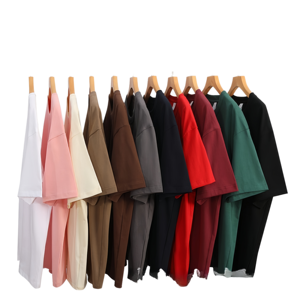 CE & AQL Inspected
Men's Wholesale 230g Oversized Printed Casual Knitted 100% Cotton T-shirt for Men with Custom Logo
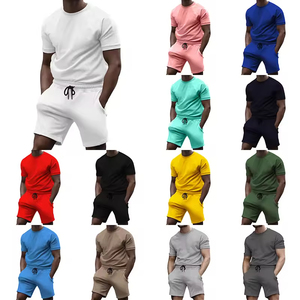 CE & AQL Inspected
Factory Price Summer Men's Lightweight Sporty Casual Shorts Set with Short Sleeve T-Shirt 2-Piece Tracksuit
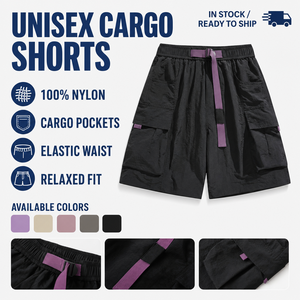 CE & AQL Inspected
MA8058 OEM Custom Private Label Unisex Cargo Shorts 100% Nylon Lightweight Elastic Waist Side Pocket Streetwear Shorts for Men
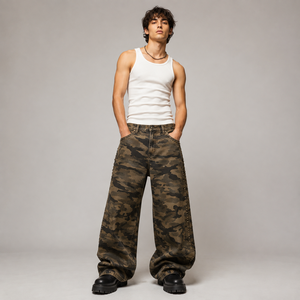 CE & AQL Inspected
OEM Wholesale Manufacturer Custom Mens Mud Wash Baggy Jeans Oversized Wide Leg Heavyweight Cotton Denim Streetwear Men's Pants
 CE & AQL Inspected
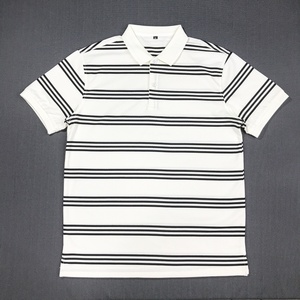
Wholesale Fashion Casual Shirts Classic Fitted Stretch Lapel Short-Sleeved Men's Knitted Breathable Cotton Woven Anti-Wrinkle
 CE & AQL Inspected
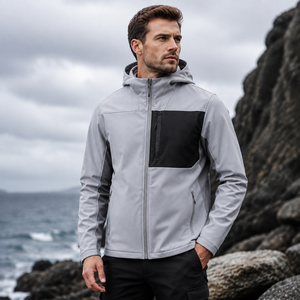
Custom Men's Lightweight Winter Softshell Jacket Outdoor Casual Warm Coat Windproof Jacket Private Label Supplier
 CE & AQL Inspected
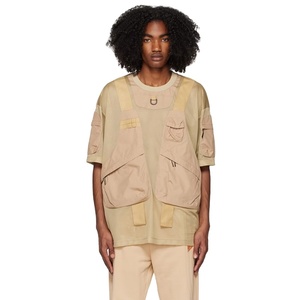
OEM Wholesale Clothing High Quality Street Wear Loose Fit Multi-Pocket Sports Fashion Trendy Cargo T-Shirt for Men
 CE & AQL Inspected
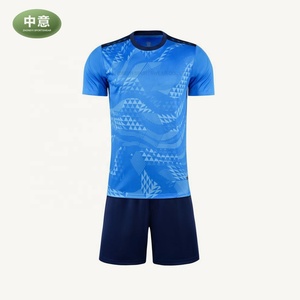
25-26 Wholesale of High-quality Men's Sportswear, Casual Wear, Training Wear and Outdoor Garments
The Strategic Imperative of CE Certified Garment Quality Inspection
Core Technical Dimensions of Garment Inspection
Professional garment inspection spans three key dimensions: physical dimensional stability, chemical residue safety (REACH & OEKO-TEX compliance), and mechanical seam strength testing. The following matrix highlights the critical parameters evaluated by certified garment inspection teams:
| Inspection Stage | Evaluation Parameters | Technical Standards & Methods | AQL Tolerance Threshold | Risk Mitigation Target |
|---|---|---|---|---|
| Raw Fabric Sourcing | GSM Weight, Fiber Content, Yarn Density, Color Fastness | ISO 105 / AATCC 8/61, ISO 3801 | AQL 1.0 Critical / 1.5 Major | Prevents fabric shrinkage, shade variation & pilling |
| Inline Cut & Sew | Stitch Density (SPI), Seam Tensile Strength, Alignment | ISO 4915 Stitch Types, ASTM D1683 | AQL 1.5 Major / 2.5 Minor | Eliminates open seams, raw edges & puckering |
| Wet Processing & Wash | Mud Wash Consistency, PH Balance, Color Bleed, Dimensional Stability | ISO 6330 Household Washing, ISO 3071 | AQL 1.0 Major | Ensures wash aesthetic uniformity & non-toxic chemical residue |
| Trims & Hardware | Zipper Pull Strength, Button Attachment Pull Force, Needle Metal Detection | ASTM F1967, 90N Pull Test / 9-Point Calibrator | AQL 0 Critical (Zero Needle Tolerated) | Prevents choking hazards & sharp metal contamination |
| Pre-Shipment (FRI) | Carton Drop Test, Packaging Barcode Scan, Folding & Polybag Standard | ISTA 1A Drop Test, ISO 2859-1 Sampling | AQL 2.5 Standard Package Inspection | Guarantees retail-ready shelf arrival without transit damage |
Why Partnering with an ISO & CE Certified Exporter Matters
Drawing from over two decades of export craftsmanship since 2005, Kanakam Exports embodies the convergence of heritage Indian artisanal craftsmanship and modern automated garment quality engineering.
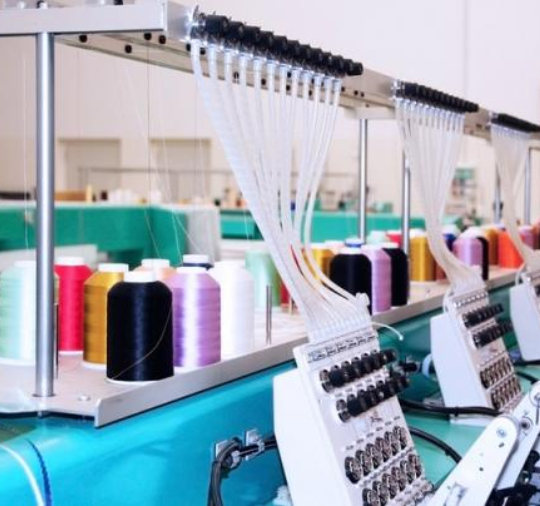
Complete Manufacturing Infrastructure & Quality Rigor
Operating out of the DLF Industrial Area, Phase-1, Faridabad, India, Kanakam Exports serves as a trusted OEM & ODM production partner for global fashion houses and retail buyers across 50+ countries.
Our multi-tier quality assurance framework integrates specialized category controllers for ladies' high fashion, children's apparel, and sports/streetwear collections. By maintaining full operational control over fabric sourcing, pattern creation, washing, embroidery, and final packaging, we ensure every garment batch achieves flawless AQL 1.0–4.0 compliance.
Process-Driven Quality Control
Independent quality inspectors monitor production at 10%, 50%, and 100% packing stages. Systematic reporting ensures transparent defect logging before goods leave the factory.
Global Fabric Procurement Network
Strategic fabric alliances across India, Italy, and East Asia enable access to certified organic cottons, high-tenacity nylon, heavy denim, and technical softshell textiles.
Heritage Artisanal Community Synergy
Seamlessly blending modern automated cutting and stitching with centuries-old Indian artisan techniques: Shibori, Bandhini, Block Printing, Zardozi, and hand-crochet embellishments.
Future Procurement & Garment Industry Development Trends
How digital quality inspection, AI-driven visual auditing, and ESG regulations are reshaping global clothing procurement through 2030.
1. AI-Powered Optical Inspection
Computer vision and automated camera gantries are replacing manual fabric surface scanning. High-resolution sensors detect weave irregularities, micro-stain drops, and stitch skips at speeds up to 120 meters per minute.
2. Digital Product Passports (DPP)
Upcoming European Union regulations require complete supply chain transparency. Modern quality inspection services now generate cryptographic batch data detailing fiber origin, chemical compliance, and carbon footprint metrics.
3. Sustainable Chemical & Wash Audits
Procurement focus is shifting toward closed-loop zero-liquid-discharge (ZLD) dyeing and eco-friendly washes (like mud-wash and ozone fading), backed by strict heavy metal and phthalate chemical lab testing.
Quality Control Protocols for Core Garment Categories
Deep-dive technical evaluation metrics across knitted, woven, outdoor, and denim garment categories.
Heavyweight Cotton Knits
For 230g+ oversized T-shirts and tracksuits, inspection focuses on gram-per-square-meter (GSM) verification, neck-rib recovery elasticity, anti-twist torque angle (<3%), and screen print cure durability against repeated washing.
Nylon & Utility Streetwear
Cargo shorts and 100% nylon garments require stress audits on multi-pocket bar-tacks, elastic waistband tension consistency, hydrophobic surface coating testing, and zip-fastener cyclic operation durability.
Denim & Mud Wash Apparel
Wide-leg denim and heavy cotton washed pants undergo strict pH testing to prevent skin irritation, tear strength checks along inseams, pocket rivet pull tests, and shade-matching against master color swatches under D65 light sources.
Technical Softshell Jackets
Outdoor outerwear demands hydrostatic head water-pressure testing (>5000mm H2O), windproof membrane bonding peel strength checks, thermal lining loft retention, and reflective safety trim visibility testing.
Garment Quality Inspection Frequently Asked Questions
Comprehensive answers to essential technical, legal, and operational questions for apparel buyers, brand managers, and sourcing agents.
Q1: What does CE Certification mean in the context of garment quality inspection services?
CE certification for garment inspection services confirms that the auditing body and manufacturing facility adhere to European Union health, safety, and environmental protection standards. For apparel exports, this encompasses chemical safety audits (REACH compliance), mechanical safety (such as cord safety in children wear under EN 14682), flame resistance testing (where applicable), and verified factory quality management protocols.
Q2: How is the Acceptable Quality Limit (AQL) level selected for apparel orders?
AQL levels define the maximum allowable number of defective units in a production sample during pre-shipment inspection (ANSI/ASQ Z1.4 / ISO 2859-1 standard). Typically, luxury and high-fashion brands demand AQL 1.0 for Major Defects and AQL 1.5 for Minor Defects. Standard commercial retail garments generally follow AQL 2.5 for Major Defects and AQL 4.0 for Minor Defects. Critical defects (such as broken needles or sharp metal edges) always carry an AQL of 0.
Q3: What specific inline quality control checks are performed during production?
Inline quality inspection occurs while 15% to 50% of the order is moving through assembly lines. Key checks include verifying cut piece dimensional tolerances, checking stitch density (stitches per inch / SPI), monitoring seam alignment, inspecting print/embroidery placement accuracy, confirming thread tension, and ensuring needle detection machine calibration is logged every 2 hours.
Q4: How do you ensure shade consistency and color fastness across large fabric dye lots?
Fabric shade consistency is evaluated using spectrophotometer shade grouping and visual light box inspection under standardized D65 daylight, TL84 store light, and CWF fluorescent conditions. Color fastness is lab-tested against washing (ISO 105-C06), rubbing/crocking (ISO 105-X12 dry and wet), and perspiration (ISO 105-E04) before bulk cutting is authorized.
Q5: What are the standard inspection procedures for custom branding, OEM prints, and washes?
Custom logo prints and specialized washes (such as vintage mud-wash or enzyme stone-wash) undergo cross-hatch tape adhesion tests, elasticity stretch tests (ensuring print ink does not crack when fabric expands), and color migration checks. For washed garments, shrinkage templates are applied pre- and post-wash to adjust pattern grading and guarantee final size specifications.
Q6: How are children's apparel inspection standards different from adult fashion?
Children’s clothing requires extra-stringent safety auditing. Key requirements include 90 Newton pull-tests for small parts (buttons, snaps, bows) to eliminate choking hazards, prohibition of free drawstrings in the head and neck area (EN 14682), nickel-free hardware verification, non-phthalate plastisol ink testing, and 100% dual-pass metal needle detection scanning.
Q7: What documentation is included in a certified pre-shipment inspection (PSI) report?
A comprehensive PSI report includes: overall pass/fail status based on chosen AQL, detailed breakdown of critical/major/minor defects discovered, high-resolution photographic evidence of defects, measurement check sheets comparing actual vs. spec sheet dimensions, carton quantity and barcode scanning verification, carton drop-test results, and signed inspector credentials.
Q8: How can international buyers initiate a custom garment inspection or OEM manufacturing inquiry?
Global buyers and brand procurement officers can initiate inquiries directly by clicking the instantaneous live-chat quotation button on our platform. Our dedicated engineering and sales team will review tech packs, target AQL requirements, fabric specifications, and order volumes to provide transparent unit quotes and inspection sampling schedules within 24 hours.
Ready to Elevate Your Garment Quality & Procurement Standards?
Partner with India's leading ISO-certified and AQL-compliant readymade garment manufacturer and exporter. Get immediate assistance on tech packs, sample audits, or bulk production inquiries.