1. Executive Summary: The Architecture of High-End Evening Dress Manufacturing
In the global luxury fashion supply chain, sourcing high-end evening dresses, couture gowns, and intricate formal wear requires an exceptional synthesis of haute couture craftsmanship, structural engineering, and institutional manufacturing control. As global consumer expectations shift toward bespoke elegance, ethical luxury, and precise fitting, fashion brands, private labels, and luxury department stores can no longer rely on standardized assembly-line production.
This comprehensive industry whitepaper, published by senior apparel supply chain strategists, examines the operational mechanics, material science, quality control protocols (AQL 1.0–2.5), and global procurement trends governing Original Equipment Manufacturing (OEM) and Original Design Manufacturing (ODM) in the luxury eveningwear sector. Drawing upon 20+ years of industrial garment manufacturing history (establishing benchmarks since 2005), this guide outlines how premium manufacturing hubs combine heritage artisan skills—such as Zardozi hand embroidery, Shibori tie-dyeing, and hand-beaded boning—with computerized CAD pattern scaling and automated cutting infrastructure.
High-end evening dress production differs fundamentally from casualwear. A single evening gown often requires over 40 distinct construction operations, including internal corsetry integration, weight-balanced drape alignment, hand-rolled silk hems, and multi-layer tulle reinforcement. Partnering with an OEM/ODM manufacturer possessing specialized category technical controllers is paramount to mitigating return rates and brand equity dilution.
2. Enterprise Infrastructure & Core Manufacturing Advantages
Building upon our legacy as a premier readymade garment export house located in the industrial garment zone of Faridabad, India, our facility acts as an integrated manufacturing engine for international buyers across North America, Europe, Australia, and the Middle East. Our operational architecture incorporates both woven and knitted garment specialization, delivering unmatched versatility across high-fashion evening gowns, structured cocktail dresses, embroidered occasionwear, and complementary premium categories.
Trend-Driven In-House ODM Design
Our specialized design team creates seasonal runway-inspired collections tailored to global market shifts. We transform conceptual sketches, tech packs, or mood boards into production-ready physical samples within 7 to 10 days.
Global Fabric Procurement Network
Direct mill relationships across India, Italy, France, and East Asia ensure access to high-grade Mulberry silk, heavy silk crepe de Chine, French Chantilly lace, metallic jacquards, and GOTS-certified organic cottons.
Strict AQL Quality Assurance
Adhering to internationally recognized AQL 1.0 to 4.0 standards. Dedicated quality controllers inspect 100% of raw textiles, conduct mid-line stitching audits, and perform final pre-shipment drop-box tests.


3. Technical Anatomy & Structural Engineering of Evening Gowns
Unlike casual fashion, an OEM evening dress manufacturer must solve complex structural challenges regarding gravity, fabric tension, silhouette retention, and skin comfort. When producing heavy floor-length gowns featuring hand-beaded embellishments, crystal appliqués, or multi-layered trains, precise internal architecture is critical.
3.1 Internal Corsetry & Boning Integration
High-end OEM dresses utilize internal corset structures built from flexible steel spiraling or high-density plastic boning encased in soft plush casing. This construction ensures that the weight of heavy beaded skirts is supported by the wearer's waist rather than delicate shoulder straps or sheer illusion mesh.
3.2 Material Selection & Textile Physics
Our fabric laboratory evaluates key physical performance indicators before cutting raw yards:
- Grammage & Tensile Strength: Evaluating GSM (Grams per Square Meter) to match dress draping requirements—ranging from lightweight 40 GSM silk chiffons to 320 GSM heavy stretch crepe.
- Seam Slippage & Fiber Migration: Preventing seam rupture under tension in fitted mermaid silhouettes by reinforcing stress points with French seams or bias-bound edge tapes.
- Color Fastness & Dry Cleaning Resilience: Ensuring intricate multi-tone gowns, metallic foils, and hand-dyed Ombré fabrics maintain color integrity under commercial dry-cleaning processes.
3.3 Fusion of Heritage Hand-Craftsmanship & Automation
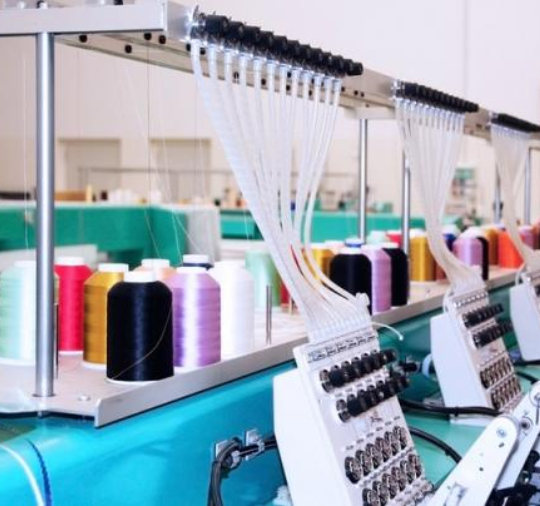
India's rich textile heritage provides our manufacturing unit with a unique competitive edge: the seamless integration of traditional artisanal embroidery with modern automated production lines.
Heritage Craftsmanship Techniques
- Zardozi Embroidery: Intricate hand-sewn metallic threadwork utilizing gold and silver wire for regal bodice embellishments.
- Shibori & Bandhini Tie-Dye: Artisan resist-dyeing methods yielding exclusive, non-replicable color gradients.
- Hand Block Printing & Cutwork: Hand-carved wooden block impressions paired with delicate laser or hand cutwork edges.
Modern Technical Execution
- Automated Laser Cutting: Sealed fabric edges that prevent fraying on synthetic chiffons and delicate laces.
- Computerized Pattern Grading: Sizing accuracy across US, UK, EU, and Asian fit standards with zero margin for error.
- Unit Production Systems (UPS): Real-time tracking of garment assembly progress to guarantee strict deadline compliance.
4. Future Procurement Trends in High-End Eveningwear (2025–2030)
The global wholesale eveningwear market is undergoing a structural paradigm shift driven by changing consumer values, digitizing supply chains, and environmental mandates. B2B buyers must align with manufacturers capable of executing the following emerging procurement models:
Agile Small-Batch OEM/ODM (Low MOQs)
Luxury retailers are moving away from massive upfront inventory commitments. Modern manufacturers must support flexible initial runs (e.g., 50–100 pieces per style) with rapid re-order capabilities to test market demand without carrying excess stock risk.
Traceable & Sustainable Luxury
Global buyers increasingly require full supply chain transparency. Future-proof eveningwear production utilizes OEKO-TEX Standard 100 certified dyes, recycled polyester linings, certified organic silks, and audit-verified ethical labor practices.
3D Digital Prototyping & Virtual Sampling
By rendering 3D digital cloth simulations prior to physical sampling, brands reduce development lead times by up to 60% and eliminate material waste, shortening time-to-market for seasonal evening collections.
Hybrid Occasionwear Functional Versatility
Consumer preference is shifting toward modular eveningwear—dresses featuring detachable trains, convertible sleeves, and adjustable inner structure—allowing multiple styling options from a single garment investment.
5. Global Apparel Manufacturing Industry Development Trends
To maintain competitive advantage in global market distribution, manufacturing facilities must adapt to macro-industrial developments:
5.1 Geographic Diversification Beyond Traditional Hubs
While East Asian manufacturing hubs continue to dominate basic commoditized apparel, specialized fashion export centers in India—such as the Delhi NCR industrial region—have emerged as the global epicenter for complex hand-embellished evening gowns, heavy artisanal bridalwear, and intricate woven fashion. This dominance stems from an unmatched concentration of skilled embroidery artisans combined with competitive labor costs and robust export logistics.
5.2 Near-Zero Defect Manufacturing via Industrial Engineering
The integration of Industrial Engineering (IE) principles in garment assembly lines has revolutionized quality consistency. Standard Allowed Minutes (SAM) are calculated for every sewing operation, ensuring optimal line balancing, reduced operator fatigue, and consistent stitch counts (SPI) across every production line batch.
6. The End-to-End OEM/ODM Manufacturing Workflow
Partnering with our export manufacturing unit follows a transparent, 4-stage systematic workflow engineered to eliminate supply chain friction and guarantee punctual delivery:
Design & Tech Pack Consultation
Review of buyer CAD sketches, tech packs, fabric specifications, measurement charts, and target price points.
Sampling & Fit Approval
Developing Proto Samples, Fit Samples, and Salesperson Samples (SMS) for buyer review and technical sign-off.
Bulk Manufacturing & AQL Audits
Precision cutting, stitching, hand-embellishment, and strict in-line & final AQL quality inspections.
Export Packaging & Global Logistics
Custom branding, polybagging, carton packing compliance, and seamless sea/air freight forwarding to 50+ countries.
7. Frequently Asked Questions (FAQ) for B2B Eveningwear Sourcing
Below are technical and operational answers to common inquiries raised by global procurement officers, apparel buyers, and private label brand managers:
Partner with India's Premier Garment Export Manufacturer
Elevate your apparel collection with industry-leading OEM/ODM manufacturing. Contact our technical merchandising team today to discuss custom sampling, factory audits, fabric sourcing, and bulk pricing options.